A wedding is a room full of different musical histories
Look around an Irish wedding reception and you may see three, four or even five generations sharing the same space. One group knows every word of a current chart hit. Another lights up at rock and roll. Another wants a proper singalong. Somebody in the corner is waiting patiently for AC/DC.
Trying to please all those people with a rigid list of twenty songs is an awkward way to approach the problem. The better solution is to plan the shape of the evening.
Start by making the floor welcoming
A dance floor can feel intimidating when it is empty. The first few songs should give people a reason to approach it. An experienced band will look at the energy in the room, the timing of the first dance and which groups are ready to join in.
Often the most useful beginning is familiar, upbeat and easy to dance to. You are creating confidence. If the couple come onto the floor and visibly enjoy themselves, that invitation becomes much stronger.
I tell couples not to underestimate their influence. Your guests take their cue from you. If you are the first people dancing, they are more likely to follow. That is one reason I urge couples to enjoy their own wedding day.
Build waves rather than blocks
It can be tempting to do twenty minutes of one genre, then twenty minutes of another. Sometimes that works; often it produces little islands of enjoyment separated by an empty floor. I prefer a flexible approach that moves between eras and energy levels while keeping a sense of direction.
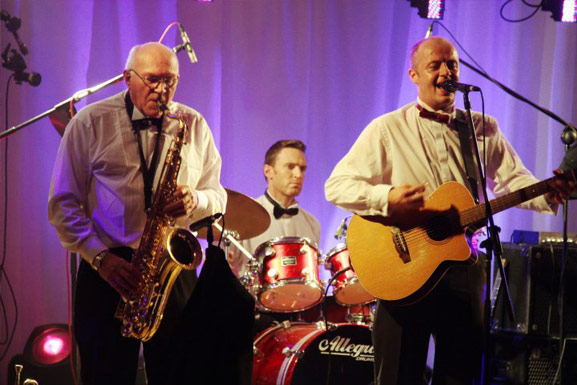
The band may begin with songs many age groups recognise, shift into a stretch of classic dance material, bring in a contemporary hit and return to another shared favourite. The transitions matter almost as much as the songs themselves. A good musician can change texture without announcing that one generation's turn is over.
The repertoire is only half the skill. The other half is seeing what the room is telling you.
Personal songs can unite a room
Imagine your mother's face when she hears a song connected with her own wedding. Or an uncle suddenly heading to the floor because the band has played the tune he cannot resist. If the band knows that story in advance, it can create a moment that feels spontaneous without being accidental.
This is why I encourage couples to share more than a list of favourite artists. Tell your entertainers about the people who matter. Explain which songs carry memories, and which ones have become family jokes. Give the musicians the chance to use that information with good judgement. See how to personalise your wedding for more.
Do not confuse volume with excitement
A floor can be full without the music being punishingly loud. Clear vocals, a tight rhythm section and a well-managed sound system help everyone enjoy the show. Guests should also have places to speak comfortably away from the dance floor.
Keep an eye on the venue's sound restrictions and on guests who may find high volume uncomfortable. Good entertainment welcomes people rather than overwhelming them.
The goal is not to force every guest to dance for every song. It is to make the evening feel inclusive, varied and alive. When the whole room starts encouraging one another onto the floor, you are getting somewhere very special.